
Task 1 – Design A Vector Based Avatar
For our first task in Professional Practice we where asked to design a Vector Based Avatar. See examples below:
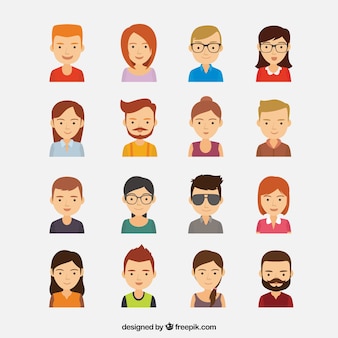
For my personal avatar, i didn’t want to jump straight in to the design, i wanted to research and design other vector images so i could get used to using Adobe Illustrator. I did this by following some tutorials on YouTube and coming up with some small designs.

Above is a quick and easy Illustrator Tutorial i followed to create a vector image of Robert Downy Jr. Below is my attempt at the tutorial. I like this simplistic style of vector and enjoyed making it, i will most likely stick to this style when creating my personal Vector Avatar.


As well as working on this Vector Avatar, i also created other objects to get used to using different colours/shades and fading, see below.


After creating a few vector images, i felt confident to begin designing my personal vector avatar. I simply chose a picture of myself and began drawing over it on a seperate layer using the pen tool.


Final Vector:
For the final design of my vector Avatar i wanted to do a more front on picture, similar to the RDJ illustration above. I am very happy with how it came out and i feel this task really helped with getting used to using Adobe Illustrator.

Task 2 – Document Research into Specific Job Roles & Career Trends:
For this task i have decided to research the role of an Illustrator. It is a goal of mine to study illustration in NCAD and to one day work in a studio as an illustrator.

Irish Illustrators I Admire:
Aoife Dooley:
 Aoife is a particular inspiration because she began her journey in Colaiste Dhulaigh. She is now one of Irelands most popular freelance Illustrators, Graphic Designers, Authors and Comedians.
Aoifes style is easily recognizable with her quirky illustrations and vibrant colors. I admire Aoife because has stuck to her own style and let her art do the talking… it is every designers dream to make a living by creating the art they love.


Digital Beast:
Conor and Tim have been working together under the Digital Beast moniker since 2011. They work primarily in advertising making illustrations, animations and motion graphics for clients such as UCD, FBD, Heineken, Vodafone, Volkswagen Bank, Permanent TSB, Universal Music Group and many more. All ideas begin in their sketchbooks and evolve into a variety of different mediums.


I love their style… it is the level of design i aspire to be at one day. Their use of shapes, lines and color make for very satisfying artwork.
Illustration Courses in Ireland:
Unfortunately for us aspiring Illustrators, there is only one Illustration-specific course in Ireland. NCAD (National College of Art & Design) offer a 3/4 year,level 8 Honors degree in Illustration. As there are only 25 places in this course it is very competitive.


As seen above, there are certain requirements one must meet before being accepted into the course. They are leaving cert or FETAC results, if these results meet the requirements, you are then asked to prepare and present a portfolio of work. This can be any work, college/personal work, drawings, paintings, digital art, videos, 3D art. NCAD have Portfolio Guidelines on their website which is very helpful.


Job Roles:
From an article i found on TargetJobs.co.uk

From researching a few articles clear that an illustrators work really depends on whether they are freelance or employed… but, the design process seems to be pretty uniform with all designers and illustrators:
- discuss the clients needs and wants… and identify the target audience for the project.
- Come to an agreement on the brief and the contract with the client, this can be a bit of a negotiation as the designer may charge at a high rate that the client may not agree with, so it is important to find a middle ground where both parties are happy.
- Come up with visual ideas that suit the brief, this can be an experimental stage for the designer, it is a chance for him/her to regurgitate any ideas they have into paper to see which one best suits the brief.
- Seek approval from the client of your ideas with rough drafts, this stage may involve going back to the drawing board (literally) if the client does not approve of your ideas.
- Use drawing / painting / sketching to grow your ideas into a finished product.
- Get paid!

As well as these, an Illustrator needs:
- excellent drawing and IT skills (Adobe Photoshop, Illustrator, After Effects etc.)
- to be able to work to a brief, solve problems creatively and adapt their style
- creativity and imagination
- to enjoy creative work.
My Evaluation:
In my opinion, an Illustrator is very similar to a Graphic Designer, although, graphic designers work with many elements of design, while illustrators focus more on the actually art work. I feel graphic designers create more layouts, using shape, color, text etc. whereas an illustrator has the freedom to draw images before uploading them to make digital versions. That is why i am drawn to it (Pun Intended), i love drawing, i love putting pencil to paper and creating art, hence why i feel i would be better suited to Illustration.
Also, i do have some experience in working with a client through a college project. The project was very beneficial as i got a taste of what it is like to work with an external person. It had its challenges but it resulted in great learning. If i was to highlight one of my weaknesses when it comes to design i would say it is my IT Skills, although they are getting better, my ability to use the likes of Photoshop and Illustrator need work.
Career Trends:

According to designbloq.com, these are the 5 main Design Industry Trends that students should know about:
1. Design Is Becoming More Important:
“It’s an exciting time,” says David Turner, joint CEO of Turner Duckworth. ”We’ve seen design become more and more important in the rapidly shifting world of communications, and design excellence is more and more valued as a true differentiator.” In short, design is no longer an optional add-on or a subset of marketing, but an integral part of business strategy, says Nicki Sprinz, managing director of Ustwo.
2. Disciplines are merging and regrouping:
Does your design course specialize in a specific discipline, If so, that’s not a bad thing. Employers like applicants who have a clear idea about where their interests lie and what they want to achieve. But just be aware that not everyone in design has such clearly defined roles. In fact, in many ways, the boundaries between different disciplines are becoming more porous.
That’s partly because of new hardware. For instance, in a world where even magazine covers and ad campaigns are being shot on iPhones, the idea that you’re not a “real photographer” unless you own expensive equipment is fast disappearing.
3. Social media is increasingly central:

Once upon a time, employers would take the time to respond to a speculative letter and check out your portfolio. Nowadays, though, they don’t necessarily need to do that. That’s because they’re finding that the best work from promising graduates often appears before them miraculously, through the magic of social media sharing.
So if you’re not sharing the work you’re most proud of (whether that be freelance work, college assignments or personal projects) on a social platform such as Instagram, Twitter, Behance, Dribbble or ArtStation, you’re probably going to miss out.
4. The industry is spreading out
Think you need to be in London, New York, Paris or Tokyo to find a decent design job? Well, it probably won’t hurt. But technologies like high-speed broadband have made the world a lot smaller, and the design industry a lot more diffuse, over recent years. And that’s a trend that can only continue into the 2020s.
So you’ll find a number of influential design agencies outside capital cities nowadays. And even in smaller towns and cities, you’ll find a surprising range of creative agencies, web startups, print shops, animation studios and in-house design departments if you dig deep enough.
My Evaluation:
From reading articles and watching documentaries, it is clear that the design industry is ever changing, and i see it as a good thing for us future graduates, it means more opportunities, more jobs, more room for creativity. Design is more important than people think, with advancements in technology moving faster than ever, there is always something that needs to be designed or redesigned. But with these advancements comes problems, and what is the primary concept of design?… problem solving. Whether it be how the ap ps on my phone are layed out, how ergonomically sound my desk is, or how i want my house to look. In the past you could get away with making all these things without a design team, but now there are new standards being set every day, having a group of creatives will give any company a significant edge over those who do not.
Options For Design Graduates:
When graduating with a Design Degree, there are many different paths one can take, fashion, photography, architecture, interior design, graphic design, animation and many more. Below are 4 Creative Career in the Design Industry that i would be particularly interested in, and where you can study them.
1. Graphic Designer / Illustrator:
One of the  most in-demand design professionals out there is a graphic designer. These professionals create designs for marketing collateral, product illustrations, brand identities and websites using computer software like the Adobe® Creative Suite. They merge technical skill with artistic ability to create a design that communicates with its desired audience.
Skills in demand:
- Adobe® Creative Suite
- Typesetting
- Packaging design
Graphic Design & Illustration Courses in Ireland that I will be applying for:
- BA Illustration: NCAD – level 8 degree, 3/4 years
- BA Graphic Design: NCAD – level 8 degree, 4 years
- BA Visual Communication Design: IADT – level 8, 4 years
- BA Design (Visual Communication): TUD – level 8 degree, 4 years
- BA Design: GMIT – level 8 degree, 4 years
2. User Experience (UX) Designer:
UX designers make websites, mobile applications, software or video games easier to navigate and more intuitive for users to interact with. They study and evaluate how people feel about a particular system and design their product to cater to the needs of the user.
Skills in demand:
- Web programming languages (JavaScript, HTML5, CSS)
- Prototyping
- UX Wireframes
3. Photographer:

Photographers utilize their creativity and composition skills alongside their technical expertise to capture photographs that tell a story or document an event. The majority of today’s photographers work with digital cameras and editing software to capture subjects in commercial-quality images.
Skills in demand:
Photography
- Product sales
- Adobe® Photoshop®
Photography Courses in Ireland:
- BA Photography: IADT -Level 8 degree, 4 years
- BA Photography: TUD – Level 8 Honors Degree,4 years
4. Multimedia Artist / Animator:
 These professionals create animations and special effects for movies, television, video games and other forms of media—both two-dimensional and three-dimensional. They work with teams of animators and artists to bring ideas to life using computer software or by writing their own computer code.
Skills in demand:
- Adobe® Photoshop®
- UX Wireframes
- Adobe Acrobat
Multimedia & Animation Courses in Ireland that I will be applying for:
- BSc Multimedia: DCU – level 8 Honors Degree, 4 years
- BA Animation: IADT – Level 8 Honors Degree, 4 years
Other Options for Design Graduates:
As well as jumping straight into looking for a job, students finishing college with a design degree in Ireland have other options. Such as:
Graduate Training Programs:
Graduate Training Programs are often run by larger companies who provide students with valuable bridge between university and working life.
Advantages of Training Programs:
- A good level of support when starting your career
- Training and development opportunities
- A mentor to talk through any problems
- The opportunity to study for a professional qualification (normally funded by your employer)
- The chance to rotate through different departments and gain experience of different functions.
Taken from an article on GradIreland.com
Further Education:
After completing their degree, graduates can continue to study at a higher level if they choose to do so. This means either completing a Masters (Level 9) or a PhD (Level 10). Most good design schools will offer these courses. NCAD for example, offer a number of masters and a PhD. Below are some further education courses in NCAD i would be interested in:
- MA Communication Design

- MA Interaction Design:

- MA Product Design:


Task 3 – Analyse a minimum of three relevant Job Advertisements:
 1. Graphic Designer:
Here is a Job Advertisement from Indeed.com for the role of a Graphic Designer.
Job Requirements:
This job requires the candidate to have proven graphic design experience and a strong portfolio of work.
For me, i feel i would have a good portfolio to present if i was to apply for this job, but my lack of experience in the actual graphic design industry may let me down. Although i do have a lot of graphic work from college, i have not really dealt with real world clients. I feel this would be valuable experience when applying for a Graphic Design Job.
2. Junior Graphic Designer:
Below is a Job Vacancy for a Junior Graphic Designer on Indeed.com that i would be interested in:

Role & Requirements:
Judging by the role and requirements for this job i feel i would be very suited to it and i will definitely consider applying for Junior Graphic Design jobs when i graduate.
I feel i would be suited because i thrive in a creative environment, and i consider myself a perfectionist so attention to detail is key for me when designing.
In terms of the requirements, i almost meet the criteria except for 1 years experience in the design industry. Other than that i will have a Graphic Design Qualification when i graduate, i am familiar with Macs through college and i feel i have a well established portfolio.
 Where i may fall down in this application is my IT skills, although i do have a lot of experience with Photoshop & Illustrator, my InDesign knowledge could be better.
And i have not used Acrobat or Premier before so i would be starting from scratch with them. Fortunately, i do have an Adobe account so i plan to install Premier Pro and begin tutorials as it seems to be a reoccurring requirement for Graphic Design Jobs.
3. Senior UX Designer:
I wanted to see what the requirements of a more senior role would be, below is a vacancy from Simplyhired.ie for a Senior UX Designer:
 Role & Requirements:
As you can see, a lot more experience and qualifications are requirement for this job.
I do plan on completing a Bachelors Degree in Design next year and this would make me much more qualified for higher positions.
This job also includes leading a design team and working with millions of people around the world as this is a multinational company. Of course i am not at that level yet but it is the level i aspire to be at in the future.
4. Animator:
Below is a job advertisement for an Animator on Simplyhired.ie
 Role & Requirements:
Again, as this is a high position job, it requires more experience and qualification.
i like the idea of working in an animation studio because i love drawing, and i would enjoy creating animations. Though animation does require a lot of technical skill and i am not at that level yet but it is my goal.
Task 4 – Design a SWOT Analysis:
A SWOT Analysis is a study undertaken by an organisation or individual to identify their internal strengths and weaknesses, as well as their external opportunities and threats.
I had a few ideas for my SWOT Analysis design so i sketched out a few to see which one i liked bes t.
t.
For me, 1 & 4 are the strongest ideas. although they do not look very aesthetic on paper i think they will look good when designed in Illustrator.
I decided to go with the first design, i put it together on Illustrator to see what the layout would look like:

I like this layout and color pallet. Next i am going to make a list of my strengths, weaknesses, opportunities and threats before i put them in to my SWOT analysis so i know exactly what to include.
Strengths:
- Drawing
- Illustration
- Attention to Detail
- Perfectionist (Also a weakness)
- Creative Thinker
- Fast Learner
- Leadership
- Outgoing
- Work Well under pressure
Weaknesses:
- Perfectionist – sometimes i dwell too much on minor details without looking at the big picture
- Lack of knowledge in design software – Photoshop, Indesign, Premier, Acrobat etc.
- Sometimes find it hard to work in a team
Opportunities:
- Online courses in Photoshop & Indesign
- Udemy.com offer online courses for most Adobe products for €12.99
- Nightcourses.com offer Premier Pro CC and Indesign evening courses in Swords, which is where i am from so it is something i will be looking into further.
- Portfolio Info Sessions – NCAD 2nd November
- Offset
Threats:
- lack of experience
- Competition
- People with more knowledge in certain fields

Task 5 – Design a Career Path Poster:
Flow Charts:
For the first step of designing my career path poster i came up with a series of flow charts, which is a simple written version of my career path.


This allowed me to get my thoughts down on paper before i begin to design the Career Path.
Infographs:
“According to the Oxford English Dictionary, an infographic (or information graphic) is “a visual representation of information or data”. But the meaning of an infographic is something much more specific.
An infographic is a collection of imagery, charts, and minimal text that gives an easy-to-understand overview of a topic.
The most visually unique, creative infographics are often the most effective, because they grab our attention and don’t let go. But it’s crucial to remember that the visuals in an infographic must do more than excite and engage. They must help us understand and remember the content of the infographic, as seen in this infographic about palm reading from Jing Zhang:”

My Career Path Poster:

Task 6 – Beginning Work as a Graphic Designer:
Legal structures and obligations when starting a business:
You can set up a business as a sole trader, as a partnership or as a limited company. The type of structure you choose depends on the kind of business you are running, with whom you will be doing business and your attitude to risk.
1. Sole Trader:
It is relatively simple to set up as a sole trader but if your business fails, your personal assets could be used to pay your creditors. Your main legal obligation is that you must register as a self-employed person with Revenue (see ‘Tax and PRSI’ below). If you wish to use a business name you must register your business name with the Companies Registration Office (CRO):
The first thing to do once you have decided that you want to start your business as a sole trader is to register for Self-Assessment. Registering as a self-employed with HMRC is easy and quick. Once you have registered, you will receive a Unique Tax Payer Reference (UTR). The UTR is a 10-digit number that is unique to you and helps HMRC identify you. You will need your UTR in order to file your tax form at the end of the financial year.#
You must keep full and accurate records of your business from the start. You need to do this whether you send in a simple summary of your profit/loss, prepare the accounts yourself, or, have an accountant do it. It is important for you to remember that the figures which are contained in your accounts, or your summary of profits/losses, or your tax returns, must be correct. The records you keep must be sufficient to enable you to make a proper return of income for tax purposes.
2. Partnership:
This is where 2 or more people agree to run a business in partnership with each other. The partnership agreement should be drawn up by a solicitor. The partners are jointly responsible for running the business and if it fails all partners are jointly responsible for the debt.
- Every partner should carry on the business to the greatest common advantage. He must perform his duties honestly and diligently.
- A partner is not entitled to get remuneration for the conduct of business, unless otherwise it is specially mentioned in the partnership deed.
- A partner must indemnify the firm for loss suffered because of his fraudulent conduct or willful neglect.
- A partner is bound to keep and render true and correct accounts of the business.
- A partner cannot carry on a competing business. If he carries on such business he shall account for and pay to the firm all profits made by him in that business.
3. Limited Company:
If you set up your business as a limited company, the business is a separate legal entity. If the company gets into debt, the creditors generally only have a claim on the assets of the company. The company must be registered with the Companies Registration Office (CRO) and the company reports and accounts must be returned to the CRO each year.
- All companies must submit and file an annual return every year, together with abridged accounts to the Registrar of Companies. Failure to do so will result in substantial penalty fees and possible strike-off proceedings, as well as loss of the audit exemption for 2 years if applicable.
- Companies should hold an Annual General Meeting (AGM) within 18 months of incorporation and thereafter on an annual basis (must be an AGM in each calendar year) The AGM and board meetings should happen in Ireland, as the management and control of the company should be in Ireland.
- Every company whose turnover or group turnover exceeds Euro 8.8 million must prepare and file audited accounts. Most registered charities (Companies Limited by Guarantee) must also file audited accounts.
Tax Relief / Grants:
There are many types of funding and support for all businesses, from startups to fully established companies.
Startups:
The Local Enterprise Office is for people interested in starting a new business or people already trading, including entrepreneurs, early-stage promoters, startups and small business looking to expand. Your Local Enterprise Office plays a major role in this, offering expertise, know-how and financial support to Irish businesses, enabling them to grow and thrive.
- Bank Loan –
When growing a new business, talk to your bank about funding options. Bank finance has many features that will appeal to SMEs and early-stage growth businesses. Below is a snapshot of how to apply for a Loan with Bank of Ireland.

Funding for Artists & Designers:
-
Awards:
“Awards, bursaries and grants are not only ways of supporting an artists’ career but can also signify success and contribute greatly to the development of their practice.
An award can vary from a monetary endowment to a residency period, exhibition or workspace provision. Those offering awards or funding do so for a wide variety of reasons. Awards are granted to enable you to support your practice in some way; perhaps providing you with the necessary funds to put on an exhibition, to make new work, to take up a residency, to travel, to create a publication, for further education, a research period or to fulfil a proposed project.
To break into such a funding system may seem extremely daunting; however the main thing to keep in mind is that it is your practice you are trying to support and you will know which award will best suit your work and help you achieve your aims.” – https://visualartists.ie/the-manual/awards-bursaries-and-grants/
Government bodies such as The Arts Council of Ireland are the Irish State’s principal instrument of arts funding and an advisory body to government on arts matters.
The Arts Councils are the most important funders for artists in Ireland in that they both administrate a number of awards that support artists’ practice. Below is an award one can apply for through the Arts Council.

Awards like these are great incentives for artists as it will motivate them to work harder on their project on the hope of obtaining a large sum of money that will greatly benefit their practice.
Freelance Market:
“Just how big is the freelancer market? Bigger than the economies of Switzerland or Saudi Arabia.” – Michael J. O’Brien | October 10, 2019
According to a new report from Upwork and Freelancers Union, it found freelancing income exceeds the gross domestic product of some major countries, at nearly $1 trillion–an amount that’s almost 5% of the United States’ GDP.
Although it does not involve Ireland, i found this infograph regarding freelancing in America (https://www.upwork.com/blog/2019/10/freelancing-in-america-2019/)

Freelancing in Ireland:
According to research from Close Brothers Commercial Finance, nearly half of all businesses use freelancers.
Of those that hire freelance workers, an average of 51% say it provides more flexibility for their business whilst a further 17% state that it encourages knowledge sharing across their company.

Judging by this research, i would say it is a great time to enter the freelance market. Businesses are starting to realize just how important a design team is when it comes to communications, marketing, advertising etc. And it is clear that a lot of these businesses are opting to hire freelancer as they feel it brings and outside opinion and a fresh outlook.
This makes a lot of sense, i imagine working as a full time designer for a company can be quite challenging, trying to come up with new ideas every week. Bringing in a freelancer to assist a design team brings with it new ideas, more creativity and more knowledge.
Costing / Pricing as a Freelancer:
Personally, from doing some small freelance projects, i charged a fairly low hourly rate at first. I knew there was better ways to charge, but i didn’t know them. I wondered how freelancer make a living at all. After researching i found that there are far better methods when charging for freelance work other than an hourly rate:
Hourly Rates:

Above is a snippet from an article by Jake Jorgovan on CareerFoundry
I found that a lot of freelancer made this mistake when starting off. When doing our first few freelance projects, we are not aware of our worth to our clients. Yes, we are getting paid for the hours we work, but sometimes the quality is far greater than the price we are charging. That is why a lot of freelancers are now charging extra for the overall project, and are now getting paid the appropriate wage for their work.
Project Based Pricing:
This is when freelancers start charging based on the quality of the project itself, not just the amount of hours worked.
Above it a good video i found which sums up why quality is more valuable than time.
This is why freelancers have begun charging based on the actual project. Some designers work faster and more efficiently that others and so they feel that their work is worth more than the time they spent on it.
Should You Use a Design Contract:
Personally, i didn’t know design contracts where a thing… but after doing some research i see that they are an essential part to any freelancers work. It allows for clarity between designer and client and does not leave anything to chance.
Do you need a design contract?:

Below is a video i found on Youtube which explains why it is a good idea to have a design contract…
Contract Templates:
It is recommended to have a few contract templates on hand, as your clients and projects vary, so will your contracts. For example, if you are commissioned to design a series of campaign posters for a large multinational company (Google, Facebook etc.), your contract would be much more detailed and sophisticated compared to if you where asked to design a logo for a local Bar/Restaurant.

Instead of coming up with your own contract from scratch you can easily buy templates online from websites like .docsketch.com & pandadoc.com.
Art / Creative Government Bodies:
Visual Artists Ireland:

“Visual Artists Ireland is the Representative body for professional visual artists in Ireland. Since our foundation in 1980, VAI has undertaken to provide equitable and independent advice, supports, and events that support artists at all stages of their career.
VAI research has identified: Isolation; a Need for Support; and a Need for Information as the three primary areas of concern for visual artists. Each of these impact areas are directly referenced by a range of services which are clearly directed towards our vision statement “We dare to dream of a time when artists will live in a world of opportunities.”” – https://visualartists.ie/regional-roundup/vais-regional-focus/
Mission
“Our Mission is to create a trusted space where visual artists are valued and have access to supports and knowledge that enable them to develop at all stages of their professional career.”
Illustrators Ireland:

“Illustrators Ireland is a non-profit organisation that supports the development of Illustration in Ireland by showcasing the work of our members and fostering links with similar organisations at home and abroad. As a professional organisation we aim to raise the profile of Irish illustration as a dynamic and cutting edge art form, as well as promoting the work and skills of our individual members.” – https://www.illustratorsireland.com/about/
Freelance Business Plan:
What should it include?:
- Write an Executive Summary:
An executive summary essentially summarises your design business and is a quick pitch: the part that investors or banks will read first. So it needs to be concise and relatively short – no more than a couple of pages. It should explain:
- Business Name
- Mission Statement
- Business Structure (Sole Trader, Partnership, Limited Comp.)
2. Talk About Yourself:
The next section to think about describes you (and your partners if you have them). You should explain:
- Why you want to start this business
- Your experience
- Your training
- Why you will make this business a success
Detail these points for each of the partners in the business. Attach well-crafted resumes of all the partners, if you have any.
3. What Are You Offering:
Next, define the service your business is going to deliver. Are you delivering motion, web design, mobile or everything? Remember that your investor or bank contact will probably know nothing about the subject area – so be thorough describing the exact nature of your business’s output.
4. Talk About Clients:
Next, talk about your clients. Describe who they are and everything about them. Be sure you understand them, and your investor will as well.
Draw up detailed information about your potential clients. If you’ve already worked for a specific client in some capacity (maybe a freelance job) explain this here. If you already have potential clients from past encounters, it proves that you can generate business.
5. Market Research:
The next section is possibly the hardest to prepare: market research. You may think you know the design industry, but do you really? Prove you know your target market inside out by exhibiting your expertise of your customer base.
6. Back Up Plane:
Finally, you must have a back-up plan. If things aren’t working out, what could you change in the short- or long-term to make your business more profitable ? Could you sacrifice international clients/pitches for local ones? Could you employ freelancers as and when they are needed instead of hiring a junior designer?
Below are a couple of examples of Business Plan templates (https://www.inc.com/larry-kim/7-insanely-creative-business-plan-templates.html)


 Paul Quinlan Graphic Design