


Anatomy of Typeface:

X – Height:
In typography, x-height is the distance between the baseline of a line of type and tops of the main body of lower case letters (i.e. excluding ascenders or descenders). The x-height is a factor in typeface identification and readability.

Leading, Kerning and Tracking:

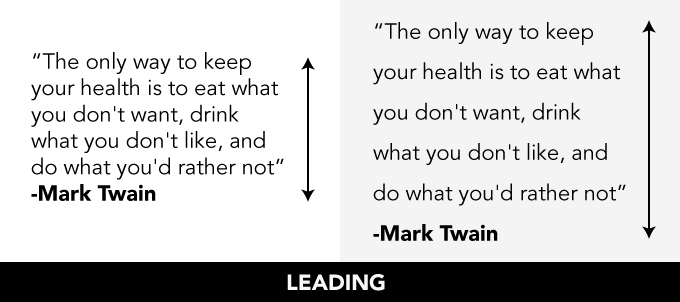
Leading is an essential design aspect that determines how text is spaced vertically in lines. For content that has multiple lines of readable text, you’ll want to make sure the distance from the bottom of the words above to the top of the words below has appropriate spacing to make them legible.
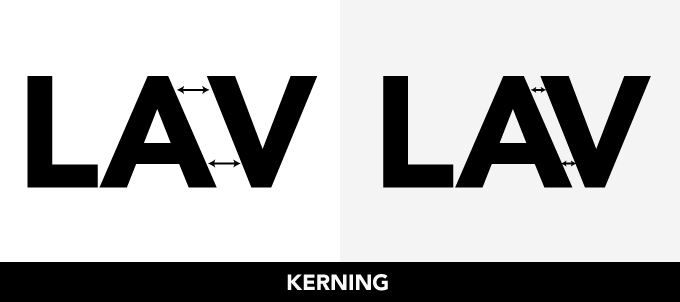
Kerning also adjusts space, but of the distance between two letters. Set too closely together, words are indecipherable; set too far apart, and they’re awkward to read.
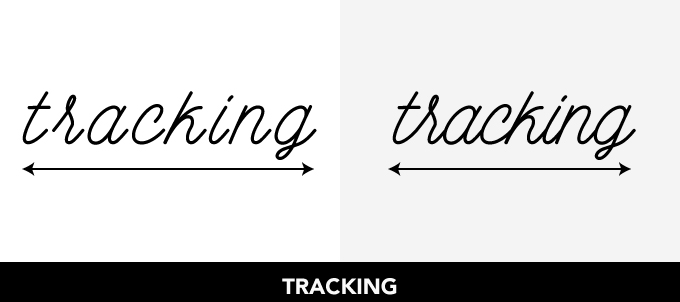
Tracking is often confused for kerning, but the concept is a little different. Tracking involves adjusting the spacing throughout the entire word. Once you’ve determined the right spacing between each letter, tracking can be used, with great restraint, to change the spacing equally between every letter at once.
David Carson(Type + Graphic Designer):

David Carson (born September 8, 1955) is an American graphic designer, art director and surfer. He is best known for his innovative magazine design, and use of experimental typography. He was the art director for the magazine Ray Gun, in which he employed much of the typographic and layout approach for which he is known. In particular, his widely imitated aesthetic defined the so-called “grunge typography” era.
Thoughts:
I really enjoyed this video of David Carson, i feel, even though i have only been studying graphic design for 2 years, i can relate to what he is saying. Once you discover your passion, in this case graphic design, you start to see the world differently, you start to notice what works and what doesn’t work in terms of design. For example, the way a page is laid out, the way a building is shaped, the way a car is designed etc etc. A REAL graphic designer has a REAL curiosity for design, does not force design onto themselves because it is “cool” or “trendy” at the time, we stick to what we like and to what we’re good at, but always make sure it is progressing, there is always better work to be done.
Jackson Pollock:
This typography project was very much inspired by the work of Jackson Pollock, an abstract artist famous for making Splashy, Drippy, Messy paintings. We used this splashing/splattering technique to create our very own type faces. Using black ink on paper, we splashed the ink, took pictures of our work, we then brought them into Photoshop where we manipulated our splashed into letters and numbers.


^Here is an example of the Splash technique we used.
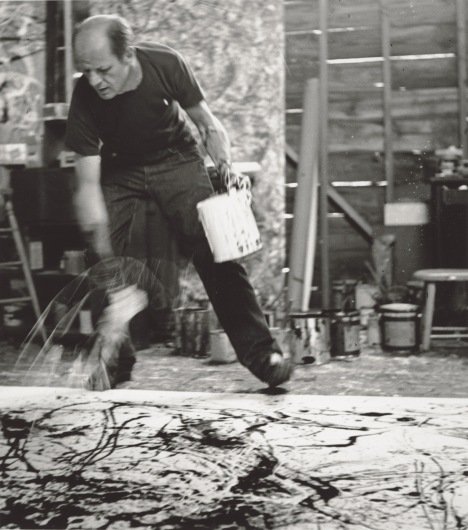
He dripped paint onto large canvases on the floor. This way of painting was called action painting because Pollock would move very quickly across the painting, dribbling the paint in long, wobbly lines. Sometimes he threw the paint onto the canvas – and some of his paintings still have footprints on them from when he stepped in the paint
Jackson Pollock was an abstract expressionist artist. The abstract expressionists were a group of young New York artists who made paintings that were non-representational, meaning they didn’t look like anything. Instead they tried to show emotions, like happiness or anger, in the expressive marks that they made in their drawings, paintings and sculptures.
FUSE Magazine:

LAUNCHED IN THE summer of 1991 by London-based designer Neville Brody and editor Jon Wozencroft, FUSE is an interactive, experimental magazine that explores the fringe of digital typography. Distributed by the FontShop international network, the quarterly journal reflects personal and idiosyncratic approaches: themes range from the secret alphabet of runes to virtual typography, from disinformation to exuberance.
Each US$69 “issue” arrives packaged in a corrugated cardboard portfolio and consists of a written introduction by Wozencroft, a Macintosh or Windows disk containing at least four specially commissioned fonts, and four posters ‘ each designed using one of the disk’s experimental typefaces.
FUSE ignores traditional notions of ownership by encouraging those who work with its fonts to extend and adapt them to their particular needs: it wants passive users to become active participants in the process of
type design.
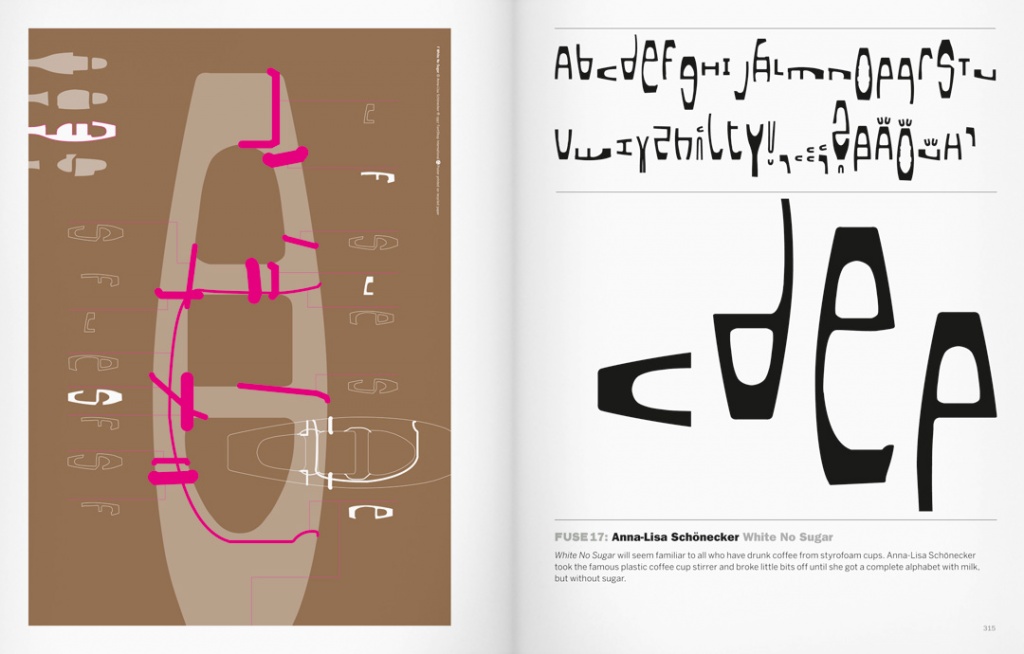
Using FUSE magazine, we got inspiration from spreads like the one above. Similar to the design here, we constructed alphabetical letters from our irregular shapes. 
Here is my version of a FUSE magazine spread. This started as a few ink splashes on paper.
Typography Final Evaluation
What?
Research showing evolution of ideas and research on other contemporary and historical magazine layouts including an analysis of FUSE magazine. Evidence of typographic studies and terminology covered in class. Such as anatomy of a typeface, x-height, type size, type classification, kerning, tracking, leading.
Who?
I researched artists such as:
- Neville Brody
- David Carson
- Jackson Pollock
Pollock was particularly influencial in this project as we used his messy, splashing technique to create our type faces.
How?
We Created our type faces using Adobe Photoshop, Illustrator and InDesign.
Why?
I feel my design works well because of its simplicity, yet it has many design elements, line, colour, shapes. All my elements work in harmony to create an aesthetically pleasing design.
What if?
I am happy with my design, but if i was to edit it, i would simply experiment more with the ink shapes, maybe see if i could make more shapes and numbers.
What next?
As well as a valuable insight into typography and magazine design, i gained a lot of technical skills using Adobe products.
 Paul Quinlan Graphic Design